
Leaderboard

Popular Content
Showing content with the highest reputation on 11/07/2025 in all areas
-
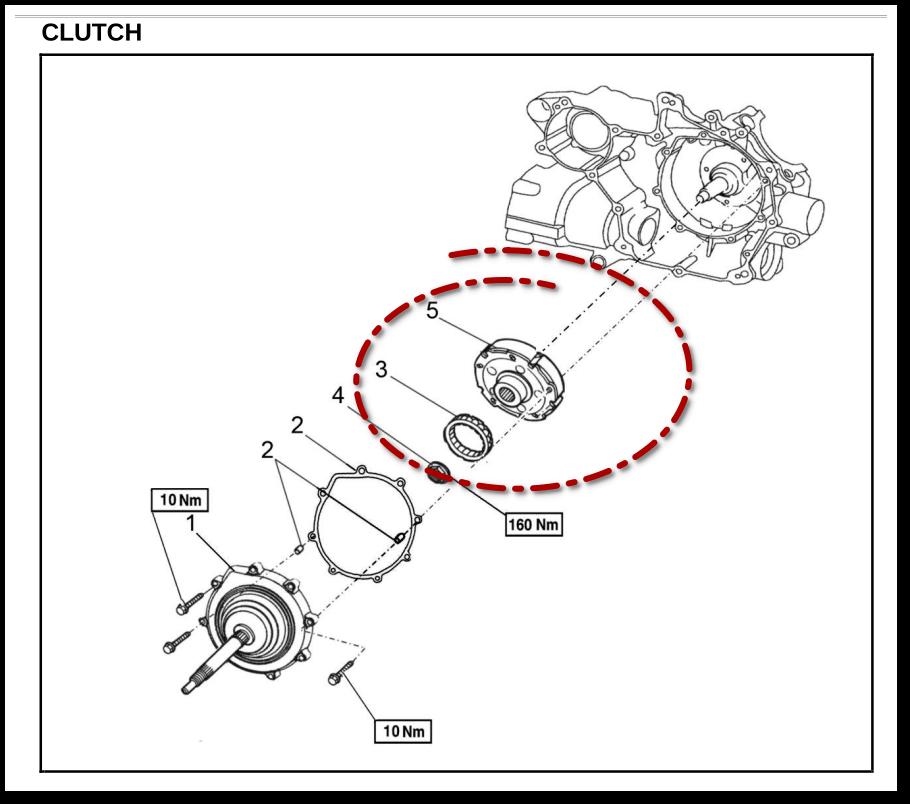
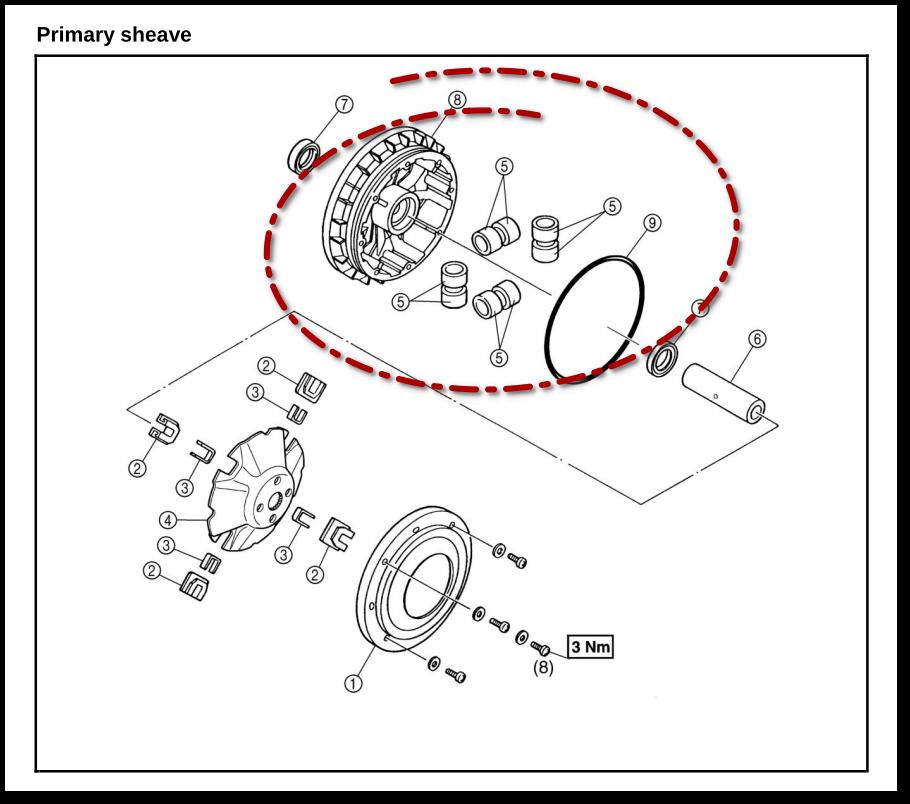
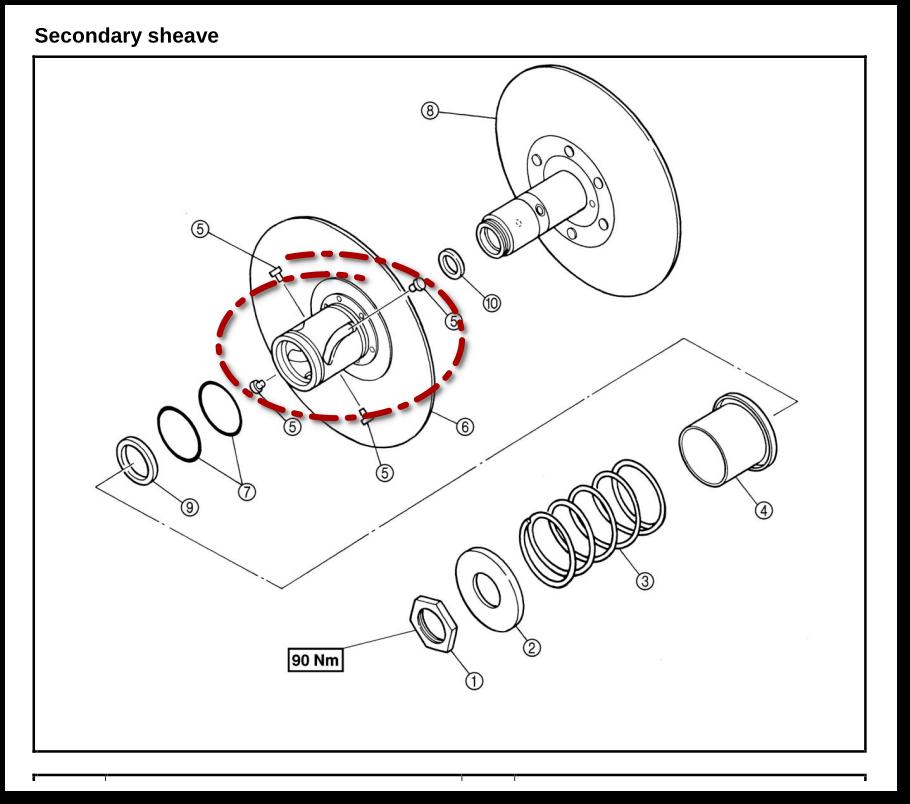
Their is only one clutch, the centrifugal wet clutch--I do not know if units with other flyweights available--but that's what would be needed to increase it's engagement rate (at the expense of driveability): In the HS series he Primary and Secondary CVT sheaves are not clutches but rather a variator (primary) and torque multiplier (secondary)--most "maxi-scooters" (400+ cc) use this type of CVT . variator: In the variator centrifugal force flings the weights outward trying to force the pulley halves together as speed increases--this increases the effective diameter of the primary sheave an d draws the belt down into the secondary sheave, attempting to reduce its diameter (I.e. a "higher" (numerically lower) gear)--but in the torque multiplier (secondary sheave) that action is opposed by the torque spring (and the torque "cam" and followers)--trying to maintain a "lower" overall gear ratio. They battle it out constantly as the vehicle's torque requirements change. The torque multiplier cam works because when the belt slips on the fixed pulley half (inboard) it does not on the movable (outboard) half, making the outer half rotate on the hub. As it rotates on the hub the cam grooves try to force the halves apart, increasing the effective diameter and forcing a yet lower ratio--this is the torque "multiplier" function. The cam profile can of course not be easily changed, however the spring can, with heavier springs favouring "lower" overall ratios and lighter springs "higher" gears. The weights in the variator work similarly, heavier favours "higher gearing" , lighter"lower gearing". But neither are clutches, despite often being referred to as such. The only thing that can "slip" and limit engine torque to the wheels (other than the belt which is not likely to) is the wet clutch; but altering the variator weights and/or torque multiplier spring can change the overall CVT ratio making clutch slippage less likely--at the expense of top speed.
 1 point
This leaderboard is set to New York/GMT-04:00